Why Drainage Is Essential for Native Gardens in Australia
Australian native plants are known for being hardy and drought tolerant, but one thing many people don’t realise is that most native plants hate wet feet. Poor drainage is one of the most common reasons native gardens fail across Australia. Understanding how native soil behaves and how drainage affects plant health is key to creating a thriving, low-maintenance Australian garden.
Finn Bowe
The Reality of Australian Native Soil
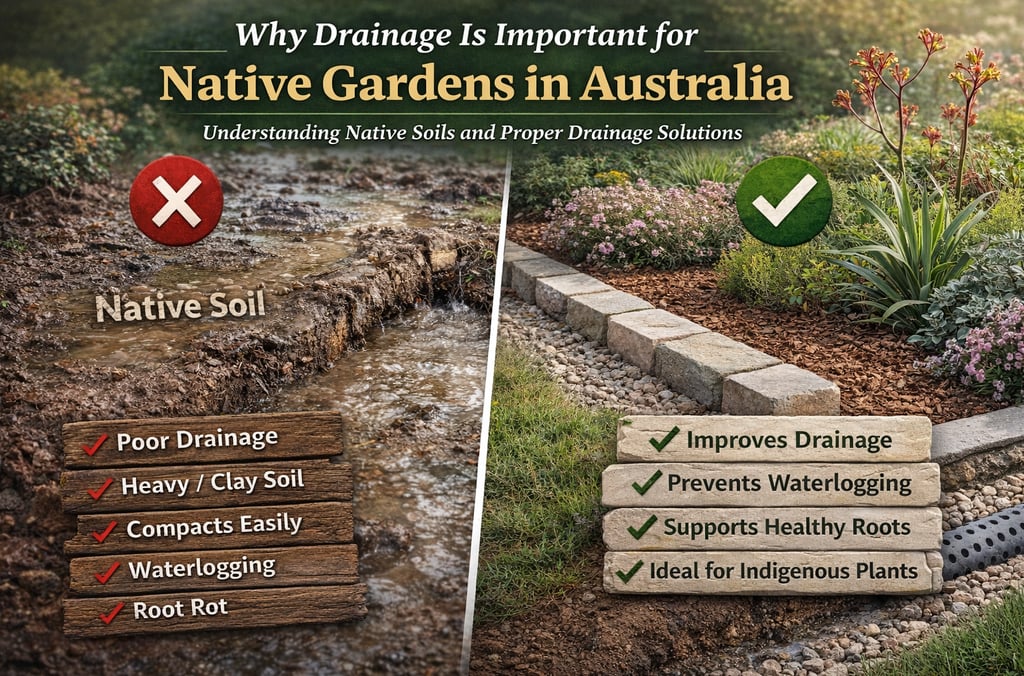
Much of Australia’s natural soil is very different from rich garden soils found in other parts of the world. Common native soil types include:
Heavy clay soils that hold water
Compacted building site soil in new developments
Low organic matter soils
Poorly structured subsoil exposed during construction
While some regions have sandy soils that drain quickly, many suburban gardens end up with dense, compacted clay that struggles to drain properly. When water can’t move through the soil, it creates the perfect conditions for root problems.
Why Poor Drainage Damages Native Plants
Most Australian natives evolved in free-draining soils, where water moves through the ground quickly. When planted in poorly draining soil, several problems occur.
Root Rot
Waterlogged soil removes oxygen from the root zone. Without oxygen, plant roots begin to rot, leading to:
Yellowing leaves
Slow growth
Sudden plant death
Fungal Diseases
Wet soil encourages harmful fungi such as Phytophthora, which can spread rapidly through a garden and kill sensitive native species.
Many popular Australian plants are particularly vulnerable to these diseases, such as:
Grevilleas
Banksias
Kangaroo paws
Weak Root Systems
Plants growing in constantly wet soil develop shallow and weak roots, making them more vulnerable to drought, heat, and strong winds.
Signs Your Garden Has Drainage Problems
Some common warning signs include:
Water pooling after rain
Soil that stays wet for days
Plants declining despite regular care
Moss or algae forming on soil
Patchy lawn or struggling garden beds
If you notice these signs, improving drainage can make a huge difference to plant health and garden longevity.
How Good Drainage Supports Native Gardens
A well-designed garden allows water to move naturally through the soil. Good drainage helps:
✔ Prevent root rot
✔ Improve soil oxygen levels
✔ Encourage deeper root growth
✔ Reduce fungal disease
✔ Support healthier native plants
With the right drainage, native gardens become more resilient, lower maintenance, and longer lasting.
Landscaping Solutions That Improve Drainage
Professional landscapers often improve drainage using a combination of techniques such as:
Installing agricultural drainage pipes
Adding free-draining soil blends
Building raised garden beds
Incorporating gravel drainage layers
Correcting garden grading and slope
These solutions help mimic the natural conditions many Australian native plants evolved in.
The Key to a Thriving Native Garden
While Australian natives are incredibly resilient, they still need the right soil conditions to thrive. Without proper drainage, even the toughest plants can struggle. By improving drainage and understanding how native soil behaves, you can create a garden that is:
Healthier
Longer lasting
Easier to maintain
Better suited to Australian conditions
For help with your garden and drainage solutions, contact Finn at Finn's Form and Foliage today.