
Why You Shouldn’t Use Pine Garden Edging (And Better Alternatives)
Finn Bowe
2 min read
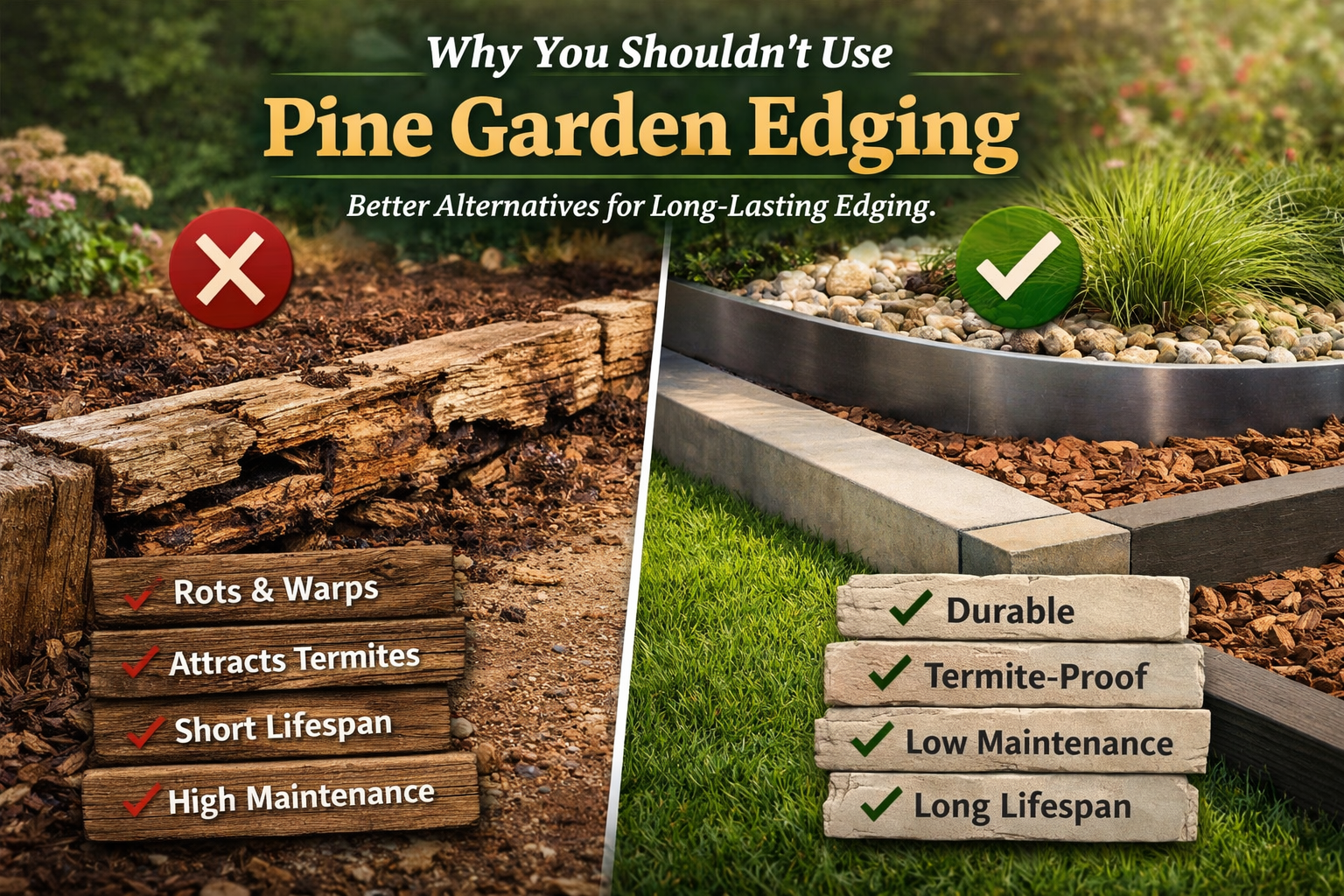
When designing your garden, edging plays a crucial role in defining spaces, improving aesthetics, and protecting your landscaping investment. One of the most common materials people consider is pine garden edging because it’s cheap and easy to install.
However, while pine edging might seem like a good idea initially, it often leads to costly replacements, ongoing maintenance, and disappointing results.
In this article, we’ll explain why you shouldn’t use pine garden edging, the major downsides, and the best alternatives for long-lasting garden edging in Australia.
What Is Pine Garden Edging?
Pine garden edging is typically made from treated softwood pine. It’s commonly used for:
Garden borders
Lawn edging
Pathway separation
Raised garden beds
While pine is widely available and budget-friendly, it’s also one of the least durable materials you can use outdoors.
7 Reasons You Should Avoid Pine Garden Edging
1. Pine Rots Quickly in Outdoor Conditions
Even when treated, pine is highly vulnerable to moisture, humidity, and soil contact. In Australia’s climate, particularly in coastal and subtropical regions, pine edging can begin to rot within 2–4 years.
This means:
Warping
Crumbling
Structural failure
Unattractive appearance
👉 Result: You’ll likely be replacing it far sooner than expected.
2. Termite & Pest Attraction
Pine is a softwood, making it extremely attractive to:
Termites
Borers
Ants
Other wood-destroying insects
Even treated pine does not guarantee termite resistance. Once pests invade, damage can spread quickly, sometimes into nearby timber structures.
3. Poor Longevity = Higher Long-Term Cost
Although pine edging is cheap upfront, it becomes expensive over time due to:
Frequent replacements
Labour costs
Disposal costs
Garden disruption
💡 A more durable material may cost slightly more initially but saves thousands over the life of your garden.
4. Warping, Bowing & Structural Failure
Exposure to heat, rain, and ground moisture causes pine to:
Warp
Twist
Crack
Bow outward
This results in:
Uneven garden borders
Soil spill
Mulch wash-out
Lawn overgrowth
Your once neat edging quickly becomes crooked and unattractive.
5. Chemical Leaching Into Soil
Most pine edging is pressure-treated with preservatives. Over time, these chemicals can leach into:
Garden soil
Vegetables
Flower beds
Lawn areas
This raises concerns for:
Soil health
Plant health
Children
Pets
6. High Maintenance Requirements
Pine edging needs:
Regular sealing
Rot treatment
Replacement boards
Structural repairs
Compared to modern alternatives, pine demands far more maintenance, making it a poor choice for busy homeowners.
7. Short Lifespan Compared to Modern Materials
Average lifespan of common edging materials:
Pine 2–5 years
Composite 15–25 years
Concrete 25–40+ years
Steel / Aluminium 20–40 years
Hardwood 15–30 years
Best Alternatives to Pine Garden Edging
1. Concrete or Masonry Garden Edging (Most Durable)
Best for: Clean lines, modern gardens, zero maintenance
Benefits:
Extremely long lifespan
Termite proof
Rot proof
Clean, professional appearance
Adds property value
2. Steel or Aluminium Garden Edging
Best for: Contemporary designs, curved gardens
Benefits:
Sleek modern look
Rust-resistant coatings
Highly durable
Flexible shaping
3. Composite Garden Edging
Best for: Timber look without timber problems
Benefits:
Wood-look appearance
No rot
No termites
Minimal maintenance
4. Hardwood Timber (If You Want Natural Timber)
Best species: Spotted Gum, Ironbark, Blackbutt
Benefits:
Far superior durability
Natural appearance
Strong pest resistance
⚠ Still requires more maintenance than steel or concrete.
Why Professional Landscapers Avoid Pine Edging
Professional landscapers rarely use pine edging because it leads to:
Customer dissatisfaction
Warranty issues
Premature failures
Increased callbacks
High-quality landscaping is built for longevity, aesthetics, and performance, and pine simply does not meet these standards.
Final Verdict: Is Pine Garden Edging Worth It?
In short, NO!.
While pine garden edging might save money initially, it almost always results in higher lifetime costs, ongoing repairs, and poor long-term appearance.
Looking for Professional Garden Edging Installation?
If you’re planning a landscaping project and want durable, modern garden edging solutions, Finn's Form and Foliage expert landscaping team can help design and install edging that:
Looks better
Lasts longer
Adds value to your property
📞 Contact Finn's Form and Foliage today for a free Landscaping Quote.